
Why Bleeding Gums Should Never Be Ignored - Dentist's Guide
Bleeding Gums Are a Sign — Not a Random Event

Bleeding Gums Can Lead to Bigger Problems
Many people ignore bleeding gums thinking it’s “just a little blood.” But the consequences of neglect can be serious. Persistent gum bleeding can lead to chronic inflammation, gum recession, and bone loss. Untreated gum disease is one of the leading causes of tooth loss in adults. Research has also shown a connection between gum disease and heart problems, diabetes, and other systemic health issues. Early action prevents these complications and helps protect both your oral health and your general health.
How to Take Care of Bleeding Gums
- Poor oral hygiene: When plaque builds up along the gumline, it irritates the gums, leading to swelling and bleeding.
- Poor oral hygiene: When plaque builds up along the gumline, it irritates the gums, leading to swelling and bleeding.
- Poor oral hygiene: When plaque builds up along the gumline, it irritates the gums, leading to swelling and bleeding.
- Poor oral hygiene: When plaque builds up along the gumline, it irritates the gums, leading to swelling and bleeding.
- Poor oral hygiene: When plaque builds up along the gumline, it irritates the gums, leading to swelling and bleeding.
- Poor oral hygiene: When plaque builds up along the gumline, it irritates the gums, leading to swelling and bleeding.
Bleeding Gums Can Lead to Bigger Problems
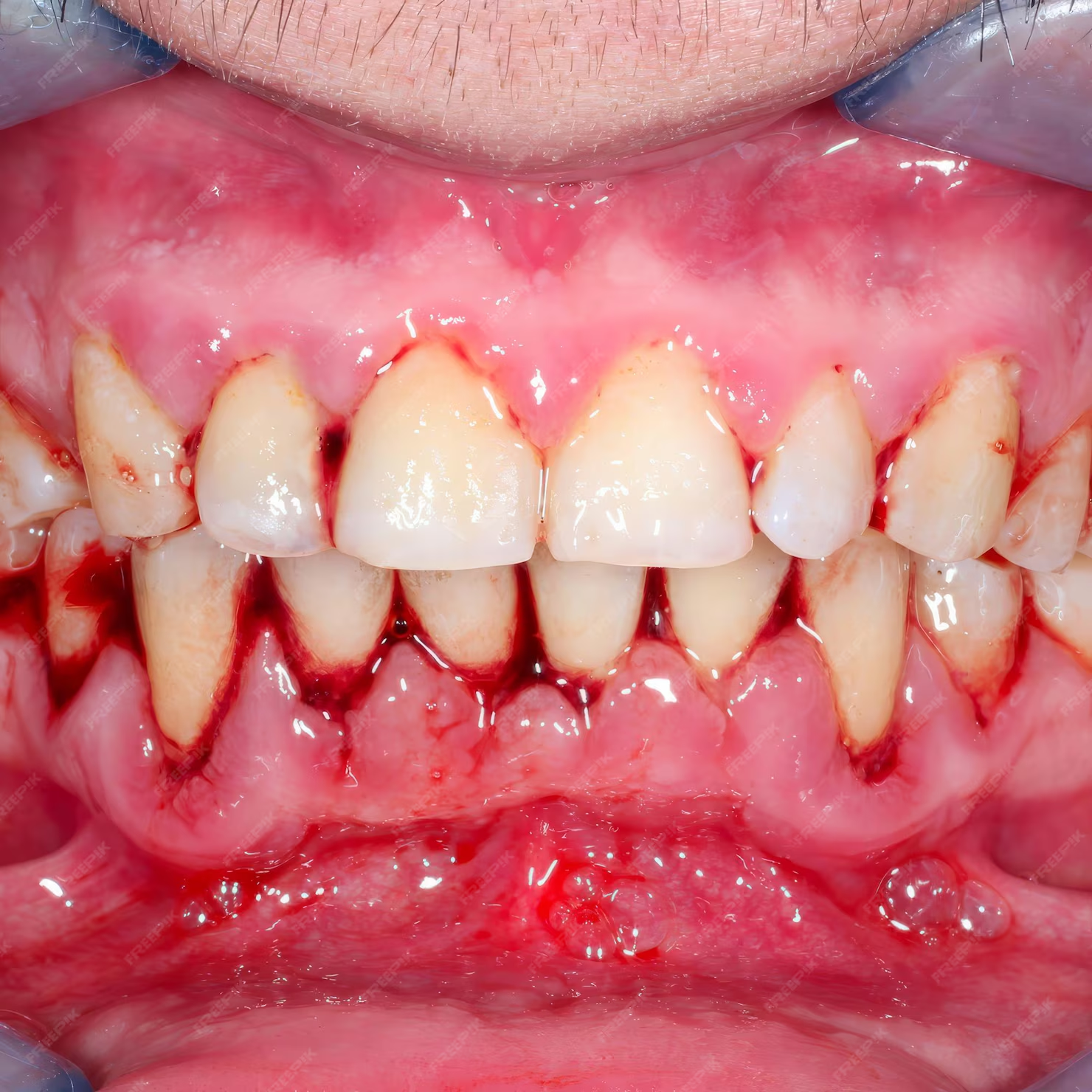
Many people ignore bleeding gums thinking it’s “just a little blood.” But the consequences of neglect can be serious. Persistent gum bleeding can lead to chronic inflammation, gum recession, and bone loss. Untreated gum disease is one of the leading causes of tooth loss in adults. Research has also shown a connection between gum disease and heart problems, diabetes, and other systemic health issues. Early action prevents these complications and helps protect both your oral health and your general health.
Bleeding Gums Can Lead to Bigger Problems
Many people ignore bleeding gums thinking it’s “just a little blood.” But the consequences of neglect can be serious. Persistent gum bleeding can lead to chronic inflammation, gum recession, and bone loss. Untreated gum disease is one of the leading causes of tooth loss in adults. Research has also shown a connection between gum disease and heart problems, diabetes, and other systemic health issues. Early action prevents these complications and helps protect both your oral health and your general health.
Bleeding Gums Can Lead to Bigger Problems
Many people ignore bleeding gums thinking it’s “just a little blood.” But the consequences of neglect can be serious. Persistent gum bleeding can lead to chronic inflammation, gum recession, and bone loss. Untreated gum disease is one of the leading causes of tooth loss in adults. Research has also shown a connection between gum disease and heart problems, diabetes, and other systemic health issues. Early action prevents these complications and helps protect both your oral health and your general health.